Text
INDIAN PARTICLE
Particle Therapy Introduction History Why Particle Therapy Indications
Why Particle Therapy
Commonly used modality for radiotherapy is X-rays, produced by a Linear accelerator; or Gamma rays from a radioactive source like Cobalt 60 or Iridium 192. These photons or x-rays are ionizing particles. These photons, when exposed to target, interact with either excitation or dislodging electrons from orbit of atoms in target matter, leading to ionization and radiobiological effects. These secondary electrons interact with matter in three ways, compton scattering, pair production and photoelectric effect. In short, they are uncharged particles or ionizing radiation beams producing secondary effects, which lead to radiobiological damage to cancer cells.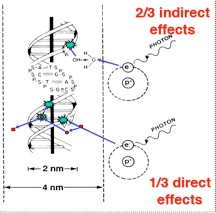
However, there are Charged Particles like Protons or heavy ions, which directly interact with matter, releasing their own energy at target leading to radiobiological effect. These have their own definitive mass and charge and are accelerated to high energy using accelerators. These charged particles differ from photons in various ways. Photons lose ether energy while passing though the matter before and beyond the target; while Charged particle does not lose much of its energy before reaching the target, and loses all energy very sharply as it reaches end of the range or target. There is no or limited radiation beyond target. This is called Bragg Peak. This special quality of charged particle makes big difference when making a radiotherapy plan to treat cancer. Photon based plans have a large penumbra of radiation delivering unwanted dose to normal tissue in vicinity of target; while with Bragg Peak effect and minimal scattering proton and heavy charged particles, dose to healthy tissue is minimal.
As we can protect surrounding structures, the particle therapy brings new hope for children who have organs under development and have low radiation tolerance as compared to adults. Also the vital structures like optic nerves can be better protected due to sharp reduction in dose beyond target. With this capability we can use higher dose and expect better results in cancer therapy. Due to minimized radiation to surrounding structure there is lesser morbidity and better quality of life.
Many pediatric cancer patients that cannot be treated without side effects, can get particle therapy by photon-based radiotherapy and still expect normal growth. Also this reduces risk of radiation-induced cancer in children and young adults.